Geopolitical Fault Lines: Reshaping Global Commerce and Capital Flows
My dear friend,
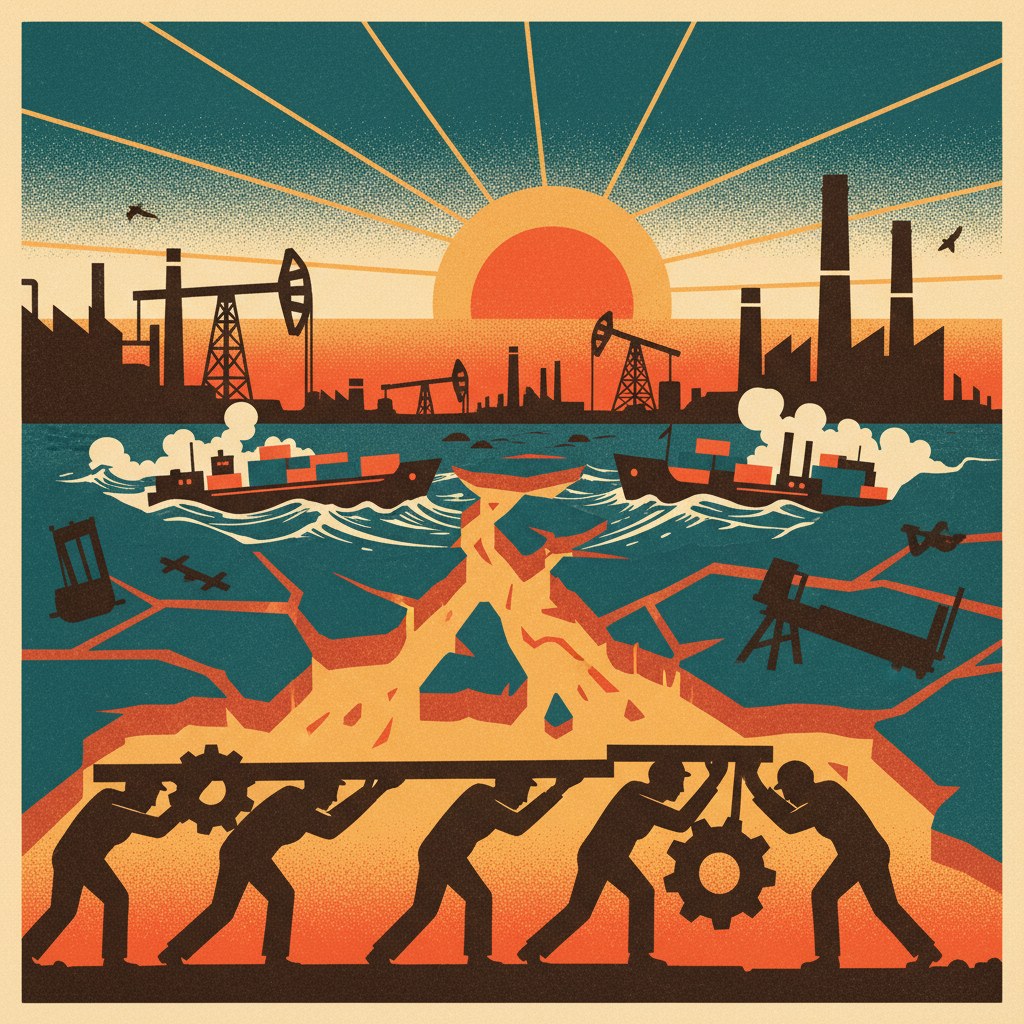
You know, it often feels like we're all just trying to navigate a particularly choppy sea, doesn't it? One moment the waters are calm, the next, a rogue wave of geopolitical machinations or trade disputes threatens to capsize the whole enterprise. It’s less about predicting the weather, I find, and more about understanding the underlying currents that are always, relentlessly, pulling things in one direction or another. And lately, those currents have been less about economic fundamentals and more about the rather blunt instruments of statecraft.
The Grand Design
The global economic narrative, if you're listening to the general hum, tends to focus on inflation, interest rates, and the occasional earnings report. But beneath that surface chatter, something far more elemental is shifting, something that feels less like a business cycle and more like a tectonic plate grinding against another. We're seeing the world's major powers, with the quiet dignity of a chess grandmaster, making moves that ripple through every corner of the market.
The Consensus: The prevailing wisdom suggests that new tariffs on Chinese steel and aluminum are a targeted, protectionist measure designed to bolster American industry and jobs, a predictable response to perceived unfair trade practices. The market, in its infinite wisdom, tends to price this in as a localized skirmish.
The Signal: What the data actually shows, however, is less about a surgical strike and more about a hardening of economic borders. President Biden's proposal to triple existing tariffs from 7.5% to 25% on certain steel and aluminum products isn't just about steel; it's a clear escalation, a signal that economic competition is increasingly being framed as a zero-sum game. This isn't just about protecting domestic producers; it's about re-engineering global supply chains by force, and Beijing is unlikely to simply shrug its shoulders.
The Implication: For investors with a 12–36 month horizon, this means recalibrating for a world where national security and economic policy are inextricably linked. Domestic producers in protected sectors might see a temporary boost, but the broader risk is a fragmentation of global trade. Companies with complex international supply chains, particularly those reliant on materials that might soon be subject to retaliatory tariffs, face increasing input costs and market access challenges. This isn't just about steel; it's about the structural de-risking of entire economies, and that will create both leaders and laggers far beyond the immediate headlines.
And as if economic friction weren't enough, the physical world seems determined to keep pace. The Middle East, an unfortunate perennial source of market anxiety, is once again reminding us that geopolitical instability has a very direct, very expensive price tag.
The Consensus: The market typically reacts to Middle East tensions by bidding up oil prices, viewing it as a temporary supply shock that will eventually normalize once the immediate crisis subsides. It’s a familiar dance, one that often ends with a sigh of relief as tensions cool.
The Signal: This time, however, the Brent crude futures trading above $90 a barrel and WTI nearing $86 isn't just a knee-jerk reaction to a single event. It's a reflection of an embedded geopolitical risk premium that seems to be growing more permanent. The escalations are less about isolated incidents and more about a region teetering on a precipice, with potential disruptions to critical shipping routes and production facilities becoming a persistent threat rather than an intermittent one. This isn't just about current supply; it's about the perceived fragility of future supply.
The Implication: For your portfolio, this means higher energy costs aren't a fleeting inflationary blip, but a potential structural drag on global growth. Companies with high energy intensity in their operations will face sustained margin pressure. Conversely, the energy sector, particularly exploration and production, might find itself in a more favorable, if volatile, environment. The larger takeaway is that the global energy grid is becoming increasingly susceptible to geopolitical shocks, demanding a more robust and diversified approach to energy security, which brings us rather neatly to some of the smaller, but no less significant, ripples we're seeing.
The Undercurrents
While the big powers play their high-stakes game, smaller, more agile players are busy adapting, innovating, and, in some cases, directly benefiting from the very instability that rattles the broader market. It's in these undercurrents that you often find the most compelling stories, the ones that hint at how the world is actually re-engineering itself, brick by digital brick.
QuantumScape Corporation (QS): You know how everyone talks about the future of electric vehicles, but then you hear about battery limitations and supply chain woes? Well, QuantumScape just took a rather significant step towards solving one of those headaches. They've successfully produced their first 24-layer solid-state battery cells on their QS-0 pre-pilot production line.
Why Now? This isn't just a lab achievement; it's a manufacturing milestone. In a world increasingly obsessed with securing critical mineral supply chains and domestic production, a scalable solid-state battery technology like QuantumScape’s becomes a strategic national asset, not just a cool gadget. It’s about energy independence and technological supremacy, making their progress particularly resonant in today's geopolitical climate.
Palantir Technologies Inc. (PLTR): If there's one thing geopolitical tensions accelerate, it's the demand for better intelligence and operational efficiency in defense. Palantir, ever the quiet enabler of the powerful, has reportedly secured a multi-year, nine-figure contract with an allied defense coalition.
Why Now? This deal, valued at approximately $150 million over three years, isn't just another government contract; it's a direct response to intensifying global rivalries. As nations scramble to enhance their defense capabilities and foster interoperability with allies, Palantir's AI-powered data integration platforms become indispensable. It confirms their unique position at the intersection of national security and cutting-edge AI, a sector that thrives when the world feels less stable.
Resilinc Corporation (Private): Remember the supply chain nightmares of the pandemic? Now imagine those exacerbated by trade wars and geopolitical fragmentation. Resilinc, a private company, just raised an $80 million Series C funding round for its AI-driven supply chain risk management platform.
Why Now? This substantial funding round is a clear signal that companies are no longer just thinking about supply chain resilience; they're actively investing heavily in it. With tariffs, sanctions, and regional conflicts making global logistics a minefield, Resilinc's ability to provide real-time visibility and mitigation strategies is no longer a luxury, but a necessity. It’s a direct beneficiary of the very geopolitical instability that worries everyone else.
Greenidge Generation Holdings Inc. (GREE): In the energy-intensive world of cryptocurrency mining, the quest for cheaper, more reliable, and politically palatable power is paramount. Greenidge, a vertically integrated Bitcoin miner, is piloting a geothermal energy project with an initial investment of $15 million.
Why Now? This move is a shrewd strategic diversification. As energy security becomes a global preoccupation and fossil fuel prices remain volatile due to geopolitical events, Greenidge's pivot towards geothermal energy isn't just about reducing carbon footprint. It's about de-risking their energy supply, aligning with ESG mandates, and potentially qualifying for green energy incentives, offering a more stable operational outlook in an otherwise turbulent sector. It’s a quiet but significant move towards energy independence.
The Contrarian Signal
The market, bless its heart, often behaves like a particularly excitable golden retriever, chasing after the most immediate, shiny object. Right now, that object is undoubtedly "geopolitical risk," manifesting as higher oil prices and trade tensions.
The Dominant Narrative: Geopolitical tensions are an unmitigated negative, a force multiplier for inflation and a drag on global growth.
The Evidence Against It: While the immediate headlines certainly paint a bleak picture, the reality is more nuanced. History shows that periods of heightened geopolitical tension often accelerate strategic investments in domestic industries, defense, and critical infrastructure. The very tariffs and supply chain disruptions that cause short-term pain are simultaneously driving massive capital allocation towards reshoring, technological independence, and energy diversification. This isn't just about reacting to threats; it's about actively building new economic foundations, often with significant government backing and incentives. The market's focus on the "cost" often overlooks the "re-investment" that follows.
The Implication: Investors should consider that while volatility is a given, the current geopolitical climate is not merely destructive. It is also a powerful catalyst for the creation of new, strategically vital industries and the re-invigoration of old ones, particularly in sectors like advanced manufacturing, defense technology, and renewable energy. It’s less about a global slowdown and more about a global realignment, creating distinct investment opportunities that defy the conventional wisdom of broad market pessimism.
The Vetta View
This week's developments, from tariffs to oil prices, paint a clear picture: the global economic system is undergoing a profound, almost geological, shift. It's less about cyclical fluctuations and more about a tectonic plate of globalization cracking under the strain of national interests.
The most important thing this week reveals is that the era of optimized, frictionless global supply chains is, for the foreseeable future, over. We are entering a period defined by strategic autonomy and economic resilience, where national security concerns will increasingly dictate industrial policy and capital flows. This isn't a temporary blip; it's a structural change, demanding a fundamental re-evaluation of how we assess risk and opportunity.
For systematic investors, this means moving beyond simple macro correlations and building models that account for these new, often non-economic, variables. It’s about recognizing that political will, rather than pure market efficiency, is now a primary driver of investment value in key sectors. The question you should be watching, then, is this: Which nations and which companies are best positioned to thrive in this new era of strategic economic competition, and how will their pursuit of autonomy reshape the global investment map?
Until Next Time...
Keep your eye on those undercurrents, my friend. The surface might be choppy, but the real story is often in the deeper shifts.
[1] Fox Business, "Biden proposes new tariffs on Chinese steel, aluminum," 2026, https://www.foxbusiness.com/economy/biden-proposes-new-tariffs-chinese-steel-aluminum [2] Bloomberg, "Oil Prices Climb as Middle East Tensions Escalate," 2026, https://www.bloomberg.com/news/articles/2026-04-24/oil-prices-climb-as-middle-east-tensions-escalate [3] MarketWatch, "QuantumScape hits key production milestone for solid-state batteries," 2026, https://www.marketwatch.com/story/quantumscape-hits-key-production-milestone-for-solid-state-batteries-2026-04-24 [4] The Information, "Palantir Wins Massive AI Defense Deal Amidst Global Unrest," 2026, https://www.theinformation.com/articles/palantir-wins-massive-ai-defense-deal-amidst-global-unrest-2026-04-24 [5] TechCrunch, "Resilinc raises $80 million Series C to expand AI-powered supply chain risk management platform," 2026, https://techcrunch.com/2026/04/24/resilinc-series-c-supply-chain-risk-management-ai-funding/ [6] Benzinga, "Greenidge Generation Pilots Geothermal Energy for Sustainable Bitcoin Mining," 2026, https://benzinga.com/news/26/04/30245678/greenidge-generation-pilots-geothermal-energy-for-sustainable-bitcoin-mining-2026-04-24
Sources & References
- Company Announcements & SEC Filings, "Official Press Releases & Regulatory Disclosures," Primary Sources, 2026
- Financial Data Providers, "Market Data & Performance Figures," Bloomberg / FactSet / Refinitiv, 2026
- Reuters / Financial Times / Bloomberg, "Financial News Reporting," Major Press, 2026
All sources were verified at the time of publication.
Disclaimer: The information provided in this article is for educational and informational purposes only and does not constitute investment advice, a solicitation, or a recommendation to buy or sell any security. Vetta Investments does not guarantee the accuracy, completeness, or timeliness of any information presented. Past performance is not indicative of future results. All investments involve risk, including the possible loss of principal. Readers should conduct their own due diligence and consult a qualified financial advisor before making any investment decisions. Vetta Investments may hold positions in securities mentioned in this article.
Vetta Alpha Growth
$19/month or $149/year
Enjoyed This Research? Go Deeper.
Vetta Alpha Growth members receive the live 20-stock V-Rank Alpha portfolio, monthly rebalancing signals, and full access to every Research & Report — the same algorithm that has returned +2,185% since 2005.
Live 20-Stock Portfolio
The exact holdings the algorithm owns right now, delivered the 2nd of every month
Monthly Rebalancing Signals
Every trade the model makes — which stocks are added, which are cut, and why
Full Research Library
Every Research & Report, fully unlocked — no excerpts, no limits, no per-article fees
$19/month
Immediate access to the live portfolio, twice-weekly Research & Reports, and monthly rebalancing signals. Cancel anytime.
Subscribe — $19/monthOr $149/year (save 35%) · Cancel anytime
Institutional systematic research costs $5,000–$25,000/year. Vetta Alpha Growth is $19/month — less than $0.63/day. Cancel anytime.
Stripe-secured checkout · Cancel anytime · No commitment
Related Articles
Geopolitics' Iron Grip: Navigating the New Age of Economic Warfare
Thursday, March 19, 2026 | Vetta Investments — News & Insights --- The global economy, much like a supertanker navigating a treacherous strait, currently finds itself in a particularly choppy patch. One moment, the captain is charting a course through relatively calm waters, the next, they're dodging icebergs of geopolitical...
Silicon's Subterranean Currents: Architects of Tomorrow's AI
Sunday, April 26, 2026 | Vetta Investments — News & Insights The financial world often feels like a vast ocean, its surface churned by the leviathans of the market – the tech titans, the pharmaceutical behemoths. Their movements create the visible waves, the headlines, the daily narratives we all consume....
Tokenization's Tectonic Shift: Re-architecting Global Finance
Saturday, April 25, 2026 | Vetta Investments — News & Insights Imagine a world where every asset, from a fractional share of a skyscraper to a single barrel of crude oil, lives on a blockchain. Not just a digital representation, mind you, but the actual, legally binding, immutable record of...
Comments (0)
Share your thoughts and join the discussion. All comments are moderated.
No comments yet. Be the first to share your thoughts!
Get More Insights Like This
Subscribe to The Long & Short of It and receive market analysis, emerging technology insights, and investment opportunities every Tuesday, Thursday, and Saturday.
Free newsletter. Unsubscribe anytime. We respect your privacy.